April 16, 2026
NeuroAI Insights: What Generative Models Reveal About the Mind
How the successes and failures of large language models are teaching us unexpected things about human cognition, language, and reasoning.
8 min read
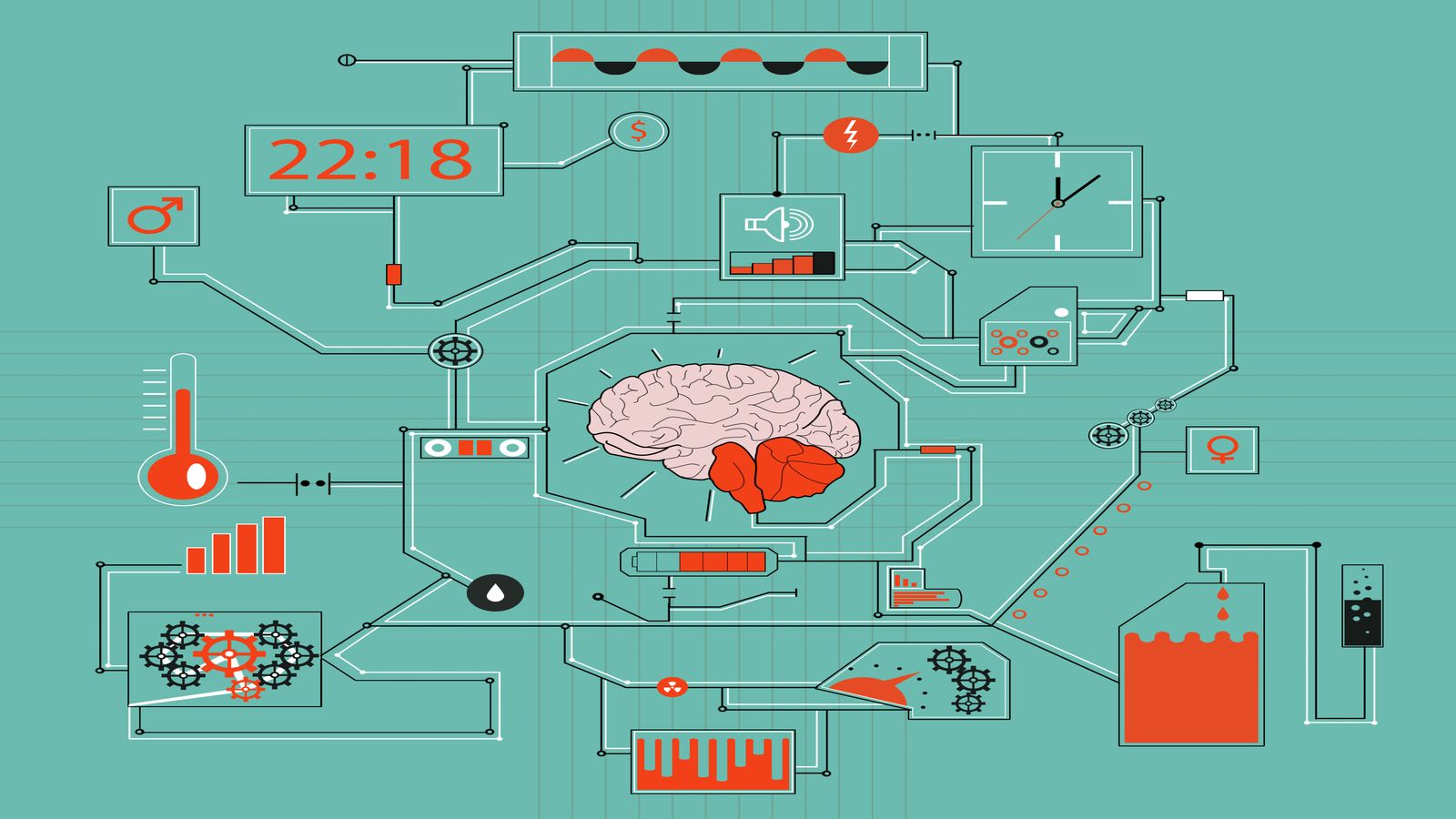
The most interesting thing about large language models is not what they can do. It is what their behavior reveals about the nature of language, reasoning, and cognition. When a system trained only on text patterns produces responses that feel intelligent, creative, and contextually appropriate, it forces a question that cognitive science has been circling for decades: how much of what we call thinking is, at bottom, sophisticated pattern matching?
This is not the question the AI industry wants to answer. They want to talk about capability benchmarks and market applications. But for anyone interested in how the mind works, the accidental insights from AI research are more valuable than the intended products.
The Pattern Matching Revelation
Before large language models, the dominant view in cognitive science was that human language use requires structured symbolic reasoning. We do not just predict the next word in a sequence. We understand grammar, semantics, pragmatics, and the intentions of the speaker. We operate on meaning, not statistics.
Large language models challenged this view by demonstrating that statistical pattern matching over vast amounts of text can produce behavior that is remarkably similar to understanding. Models with no explicit grammar rules generate grammatically correct sentences. Models with no access to the physical world describe physical processes accurately. Models with no theory of mind adjust their responses based on conversational context in ways that mimic empathy.
This does not prove that human cognition is "just" pattern matching. But it does suggest that pattern matching is more powerful than cognitive scientists previously believed, and that much of what we call understanding may be built on a foundation of pattern recognition that is more similar to what these models do than we would like to admit.
The fast thinking habits that Boyd and Kahneman both described, the rapid, intuitive responses that precede deliberate reasoning, may be closer to what language models do than what formal logic does. The fast system matches patterns. The slow system checks whether the pattern match is correct. Both are necessary. But the fast system does more of the heavy lifting than we typically acknowledge.
The Anthropomorphism Trap
There is a complementary danger: reading too much human cognition into machine behavior. Anthropomorphism is the perennial design error, and AI makes it worse because the outputs look so human.
When a language model produces a response that appears to show understanding, empathy, or creativity, the natural inference is that it possesses those qualities. But the inference is unwarranted. The model produces outputs that correlate with understanding because the training data contains examples of understanding. It produces outputs that correlate with empathy because the training data contains empathetic text. The correlation between output and internal state, which is strong in humans, may be zero in machines.
This distinction matters not just philosophically but practically. If you attribute understanding to a system that matches patterns, you will trust it in situations where pattern matching fails. And pattern matching fails precisely in the situations where genuine understanding matters most: novel contexts, ambiguous evidence, and problems that require reasoning about things that are not well-represented in the training data.
What the Failures Teach
The failures of language models are more instructive than their successes. A model that can write a compelling essay about quantum physics but cannot reliably count the number of letters in a word reveals something important about the difference between statistical fluency and genuine understanding.
A model that generates confident but incorrect answers about recent events reveals something about the difference between pattern completion and factual reasoning. The model is not hallucinating in the clinical sense. It is doing what it was trained to do: producing text that is statistically consistent with its training data. When the training data does not contain the relevant facts, the model produces text that is consistent with patterns rather than reality.
These failure modes illuminate human cognitive failures as well. Humans also confuse fluency with understanding. We also generate confident answers based on pattern matching rather than careful reasoning. We also have difficulty distinguishing between something we actually know and something we can construct a plausible-sounding account of. The language model's failures are a mirror for our own, made visible by the fact that the model has no mechanism for hiding them.
Language Shapes Thinking: The Machine Evidence
The thinking in a foreign language essay explored how the language you think in shapes the decisions you make. Large language models provide unexpected evidence for this claim.
Models trained predominantly on English text exhibit reasoning patterns, cultural assumptions, and conceptual framings that are distinctly Anglophone. When the same architecture is trained on Chinese, Japanese, or Arabic text, it exhibits different patterns, not just in vocabulary but in how it structures arguments, what it treats as relevant evidence, and how it handles ambiguity.
This is a powerful demonstration that language is not just a vehicle for pre-formed thoughts. It is a medium that shapes the thoughts themselves. The model has no culture, no experience, no identity. It has only text. And the text alone is sufficient to produce measurably different cognitive styles across languages. If text alone can do that to a machine, the effect of language on human cognition, where text is layered on top of culture, experience, and identity, is likely even more profound than we imagined.
Mental Models and Machine Models
The concept of mental models takes on new significance in light of AI research. A mental model is a simplified internal representation of how something works. We use mental models constantly: to predict what will happen, to diagnose what went wrong, to decide what to do next.
Language models appear to develop something functionally similar. Through training, they build internal representations of concepts, relationships, and processes that allow them to generate contextually appropriate responses. These are not mental models in the human sense. They do not involve conscious understanding. But they are structural analogs that perform a similar function.
The insight for human cognition is that mental models may be more mechanical, and less conscious, than we typically assume. Much of our day-to-day reasoning may be driven by internal representations that we did not consciously construct and cannot consciously inspect. The feeling of understanding may be a post-hoc interpretation of a pattern-matching process that happens below the level of awareness.
The Functional Fixedness Lesson
Language models also exhibit something resembling functional fixedness: the tendency to see things only in terms of their conventional function. Ask a model to use a brick as a paperweight and it responds fluently. Ask it to use a brick as a musical instrument and the response is less confident, more likely to be generic or unhelpful.
This is revealing because the model has no physical experience with bricks. Its functional fixedness is purely textual: it has seen bricks described as building materials and paperweights far more often than as musical instruments. The fixedness is a property of the training distribution, not of physical experience.
For humans, functional fixedness may similarly be more about exposure patterns than we realize. We see objects used in certain ways thousands of times, and that exposure builds strong pattern associations that resist creative reinterpretation. Breaking functional fixedness, a key component of creative thinking, may involve deliberately seeking exposure to unconventional uses rather than just willing yourself to "think outside the box."
The machines are mirrors. Imperfect, distorted, but illuminating. What they show us about ourselves is worth paying attention to, even when, especially when, the reflection is unflattering.